How to Taste Cheese Like a French Person: A Simple Guide for Travelers
By Max, cheesemonger and founder of EatCheeseWithMax · Last updated
To taste cheese like a French person, take it out of the fridge 30 to 45 minutes ahead, go from the mildest cheese to the strongest, look and smell before you bite, eat it with crusty bread, and pair it with a wine of the same intensity. Slow down and stay curious.
So, you’ve made it to France – a country with 46 protected-designation (AOP) cheeses and countless local ones. You’re strolling through a market, spotting names like Tomme de brebis, Brie de Meaux, or Bleu d’Auvergne, and suddenly… you feel overwhelmed.
Where do you even begin? How do you actually taste cheese the French way?
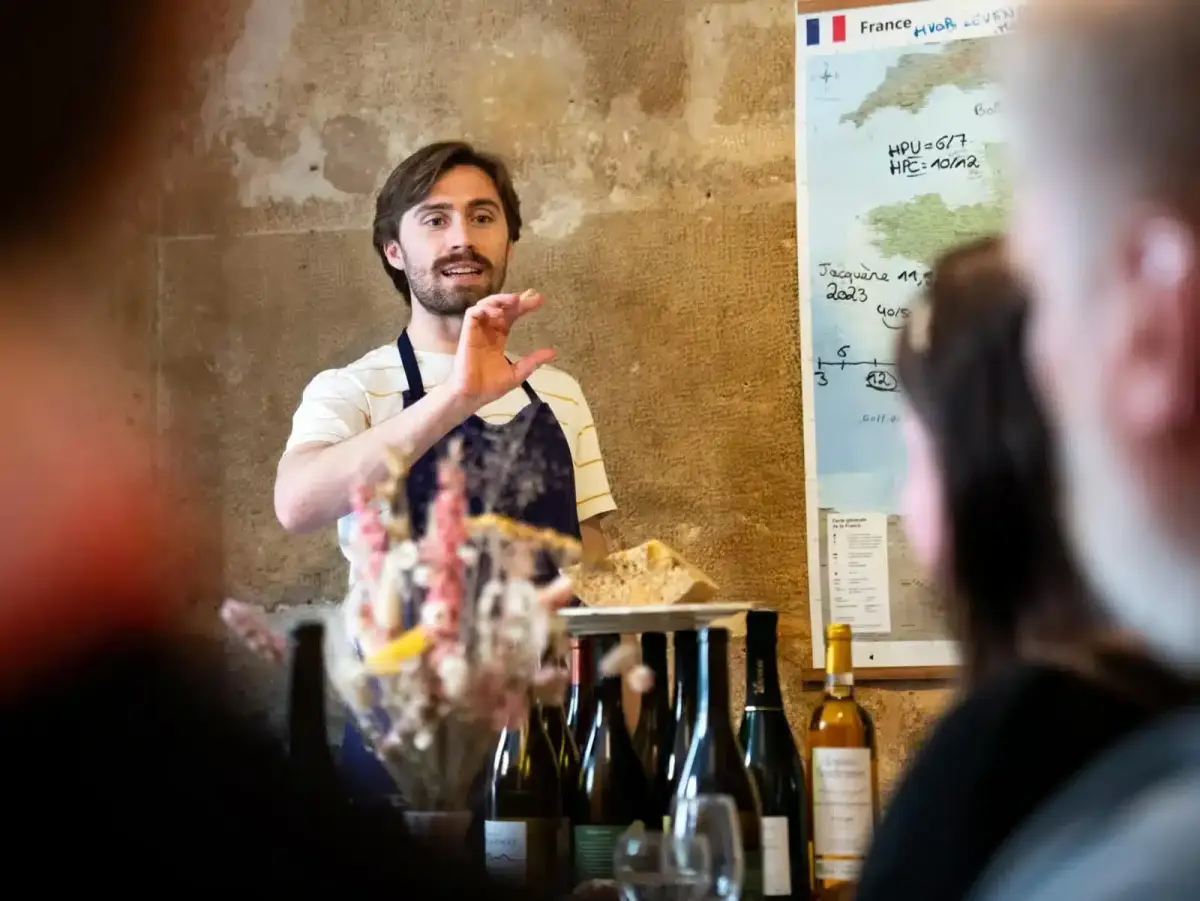
As a local fromager hosting cheese tastings in Paris, I’m here to help! Whether you’re building your own cheese board or joining a tasting experience, here’s how to taste cheese like a true Frenchie – simply, slowly, and with joy.
1. Take it out of the fridge (seriously)
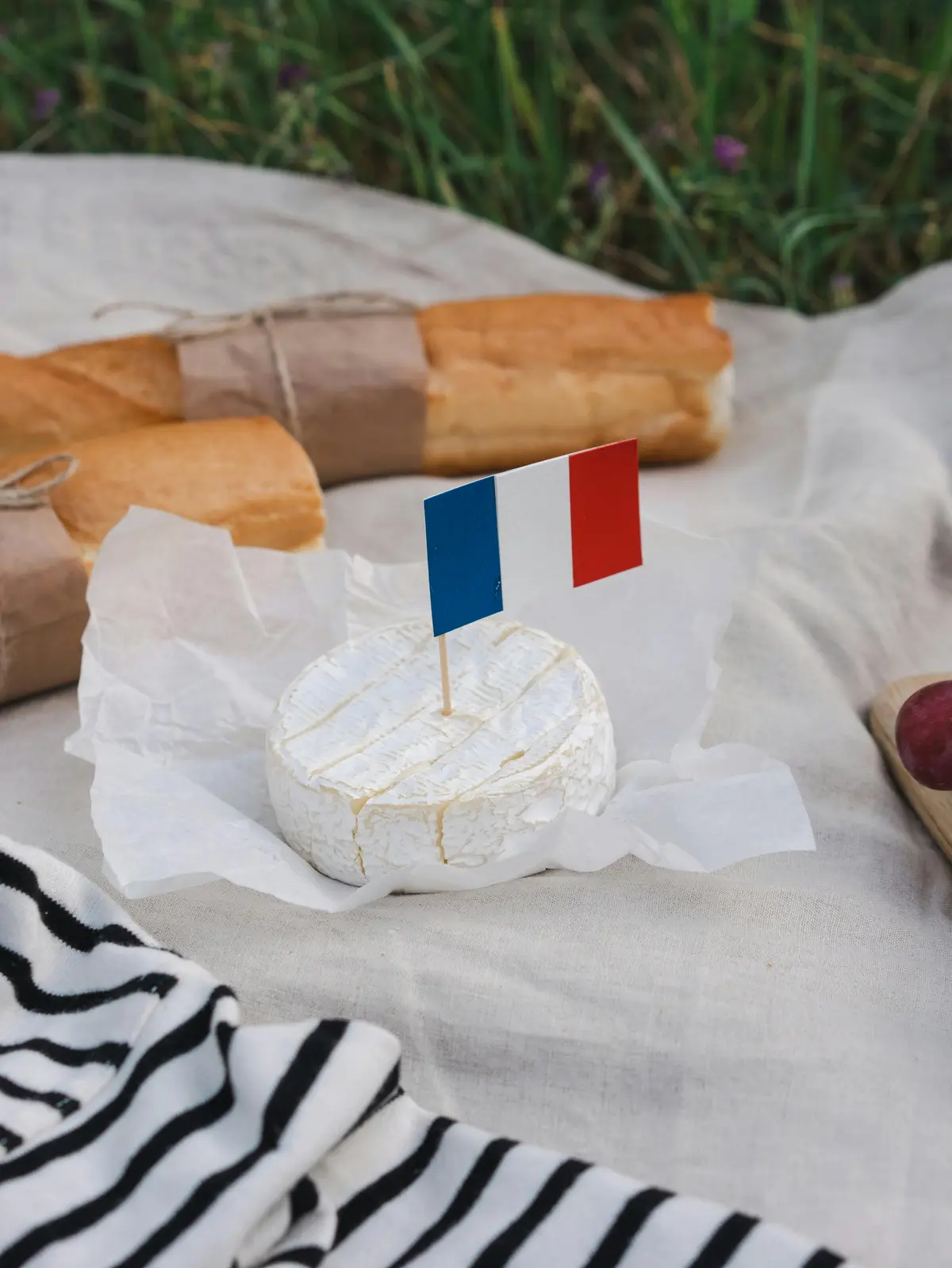
French people never eat cheese cold. That’s rule number one!
Cheese needs to breathe. The texture softens, the aromas develop, and the flavor becomes more complex. Always take your cheese out of the fridge at least 30 to 45 minutes before tasting.
During my tastings in Montmartre, guests are always surprised by how much more expressive the flavors are at room temperature!
2. Go from mild to strong
There’s a natural order in cheese tasting – just like in wine. You wouldn’t start with a bold red wine, right? Same logic here.
Start with the mild, fresh cheeses like young goat cheese, Brillat-Savarin, etc. Then move toward stronger, aged cheeses like Roquefort or Époisses, etc.
Your palate will thank you for the gentle progression.
That’s exactly how I build the cheese flights in my tasting experience – it creates a journey of textures and flavors. If you are building your own board, start with my method for choosing French cheese by family.
3. Taste with all your senses
In France, we don’t just eat cheese – we admire it first.
Look at the color of the rind, the texture of the paste, and take a moment to smell it. Then, take a small bite and let it melt in your mouth.
Try it on its own first, then with a piece of crusty bread (never crackers – that’s not how we do it here!).
During my tastings, I encourage everyone to describe what they feel: creamy? earthy? grassy? There’s no right or wrong answer – it’s all about discovering.
4. Ask questions: there are no silly ones
In France, cheese is more than food – it’s part of our identity.
And here’s something important: there’s no such thing as a silly question when it comes to cheese. The French are proud of their cheese heritage, and most people will be happy to share stories and knowledge with you – whether it’s about aging, regions, milk types, or traditions. One good question to ask a cheesemonger is which cheeses are in season.
During my cheese tastings in Paris, guests often ask questions like “What’s the difference between Brie and Camembert?” or “Why does this one smell so strong?” – and I love answering them. It sparks conversations and creates real connection.
5. Pair with wine, but keep it simple
Wine and cheese belong together – but don’t overcomplicate it.
My golden rule: match intensity. A bold cheese goes with a bold wine, and a delicate cheese works better with something light and fresh. I explain the rule in detail in my French cheese and wine pairing guide.
Here are a few classic French pairings I love:
| Cheese | Wine | Why it works |
|---|---|---|
| Comté | Vin Jaune | Nutty and oxidative, a powerful combo |
| Roquefort | Sweet dessert wine | Saltiness meets sweetness |
| Goat cheese | Sancerre | Fresh and bright, a French classic |
And here’s a tip that surprises many guests: taste the cheese first, then the wine.
Why? Because the fat in the cheese coats your palate, softens the wine’s acidity or tannins, and often reduces the alcohol sensation, revealing new aromas and balance.
It’s pure harmony in your mouth.
FAQ
Should cheese be served cold?
No. Take it out of the fridge 30 to 45 minutes before tasting. At room temperature the texture softens and the aromas open up.
In what order should you eat the cheeses on a board?
Go from mild to strong. Start with fresh, young cheeses and finish with the powerful ones such as Roquefort or Époisses, so the first cheeses are not overwhelmed.
Do the French eat cheese with crackers?
No, we eat it with crusty bread. Taste the cheese on its own first, then with a piece of baguette.
Should you taste the cheese or the wine first?
Taste the cheese first, then the wine. The fat in the cheese coats your palate and softens the wine’s acidity or tannins, which reveals new aromas.